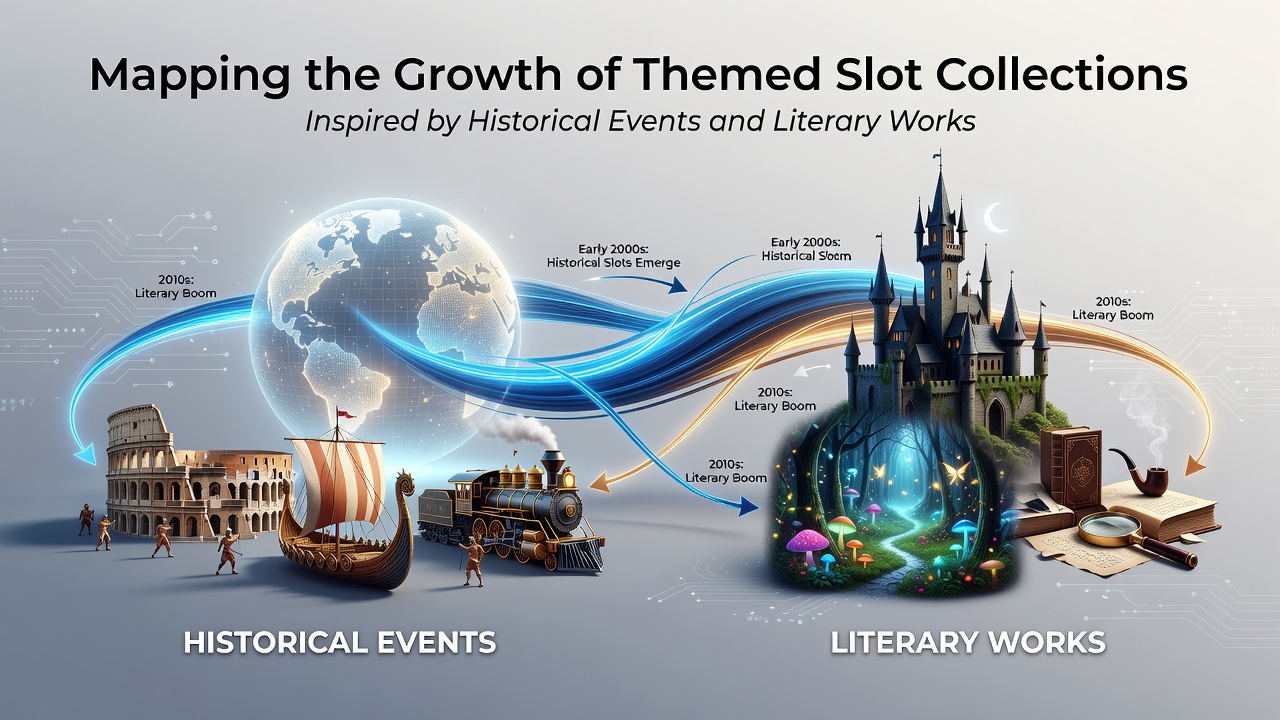
Charting the Development of Themed Slot Collections Rooted in Historical Events and Literary Masterpieces
Developers have steadily expanded themed slot collections that draw directly from documented historical events and established literary works, creating series that combine narrative elements with standard reel mechanics. Data from industry reports show consistent releases of such collections across multiple jurisdictions since the early 2010s, with particular acceleration noted between 2020 and 2025 as digital platforms increased content variety.
Collections often organize individual titles around shared themes, allowing players to encounter linked bonus rounds or progressive elements that reference the same source material. Observers note that this approach differs from standalone games by building cumulative engagement through recurring symbols and story arcs drawn from verifiable events or texts.
Origins of Historical and Literary Themes in Slot Design
Early examples appeared in land-based venues where manufacturers incorporated symbols tied to ancient civilizations or well-known novels, adapting mechanical reels to display pyramids, scrolls, or period-specific artifacts. By the mid-2000s, online platforms adopted these motifs at scale, leading to dedicated collections that grouped multiple games under single historical periods such as the Renaissance or the Industrial Revolution.
Research indicates that literary adaptations followed a parallel path, beginning with public-domain classics like 19th-century novels before expanding into 20th-century works once licensing agreements became more common. Those who track release patterns report that collections inspired by literature frequently include character-based wild symbols and narrative-triggered free spin sequences that mirror plot points from the source texts.
Expansion Patterns Observed Through 2026
Market data compiled through September 2026 reveal continued growth in the number of themed collections released annually, with developers citing improved rendering tools that allow richer depictions of historical settings and literary scenes. Figures from regional gaming associations demonstrate that such collections now account for a measurable share of new title launches in North American and European markets, though exact percentages vary by operator portfolio size.
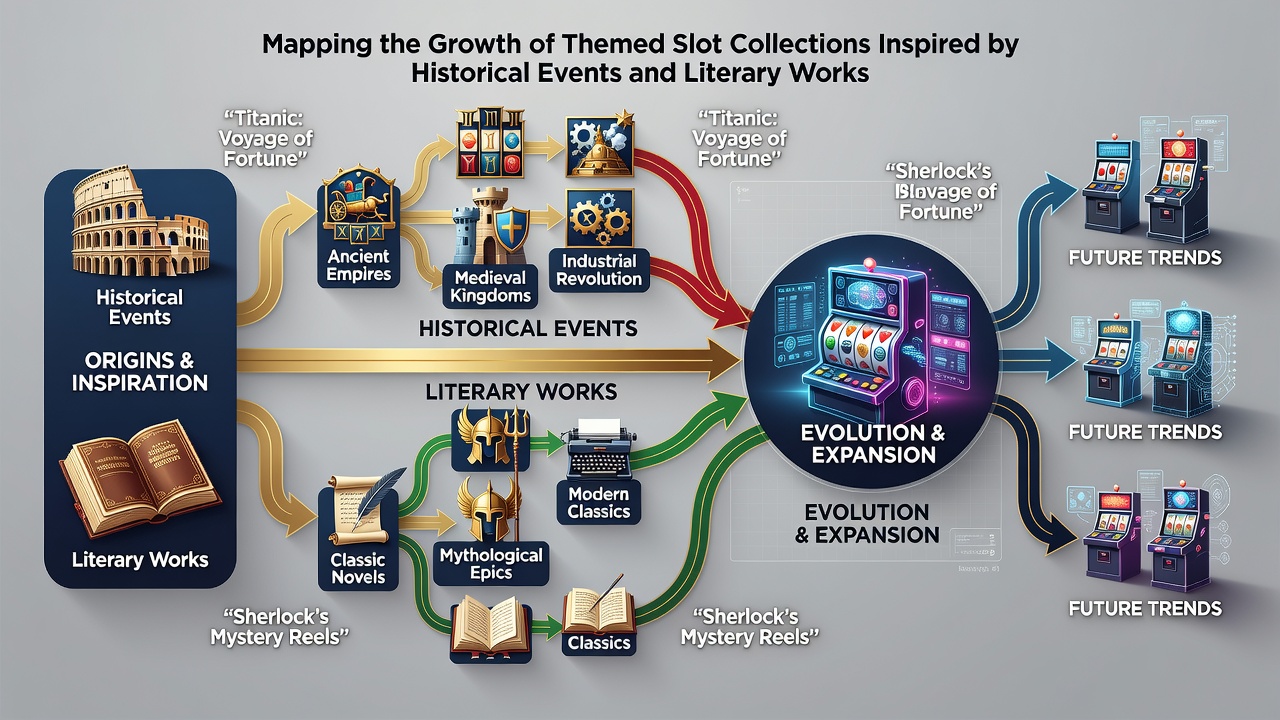
Collections built around specific historical events, such as major explorations or pivotal battles, tend to feature timeline-based progression systems where players unlock additional reels or multipliers as they advance through documented milestones. Literary collections, by contrast, often emphasize ensemble casts of symbols representing multiple characters, with bonus rounds structured around key chapters or acts from the original works.
Case Examples of Integrated Collections
One established series groups games around the Age of Discovery, linking titles that reference documented voyages with shared jackpot pools that accumulate across the collection. Another set draws from Victorian-era literature, placing multiple novels into a single ecosystem where symbols and soundtracks cross-reference between individual games while maintaining distinct reel configurations.
Industry analyses show that these integrated structures encourage extended play sessions because participants can move between titles without losing thematic continuity. Data compiled by research institutions indicate higher retention metrics for collections that maintain consistent artwork styles and narrative threads across releases, particularly when new entries reference events or texts already familiar to target audiences.
Industry and Regulatory Context
According to reports issued by the American Gaming Association, themed content development aligns with broader trends in player preference data collected from licensed operators. Separate studies conducted by Australian academic groups have examined how licensing arrangements for literary properties influence release schedules and content localization across different regulatory environments.
Those monitoring September 2026 releases note that several operators introduced updated collections referencing both historical expeditions and classic adventure novels, incorporating updated compliance features required by various licensing bodies. These updates focus on transparent display of return-to-player percentages and clear separation of bonus mechanics from core game play.
Conclusion
The documented growth of themed slot collections continues to reflect coordinated development efforts that pair historical records and literary sources with standard slot mechanics. Available data through September 2026 confirm ongoing expansion in both the number of collections and the technical sophistication applied to their presentation, while regulatory frameworks in multiple regions shape how these titles reach licensed platforms.